0
Take your ancho and pasilla chiles — three anchos, two pasillas — and tear away the stems and shake out the seeds. Now hold each one over the comal on a hot dry flame, pressing it flat with your fingers for just a breath or two on each side. You are not burning them, you are waking them. When the smell rises up sharp and earthy and makes your eyes blink, they are ready. Lay them in a bowl and pour hot water over them. Let them rest 15 minutes until they are soft enough to fold in your hand like cloth.
1
While the chiles soak, cut your chicken thighs into pieces and leave the skin where it belongs. Heat two tablespoons of oil in your cazuela — clay if you have it, heavy iron if you do not — over medium-high heat. Salt the chicken well. When the oil shimmers and breathes, lay the pieces skin-side down and do not touch them. Six, maybe seven minutes. You will hear them stop spitting and settle into a quiet sizzle — that is the skin going golden. Turn them and give the other side four minutes. Take the chicken out and let it rest on a plate.
2
In the same pot with all those good brown bits still in the bottom, add one more tablespoon of oil. Slice half a white onion and let it soften and color in the fat, about four minutes, stirring with a wooden spoon. Add six cloves of garlic chopped fine and let them toast for one minute — you will smell their strength come up. Then throw in a teaspoon of whole cumin seed and wait for the crackling and the pop. That sound means the seed has opened itself to you. Thirty seconds, no more.
3
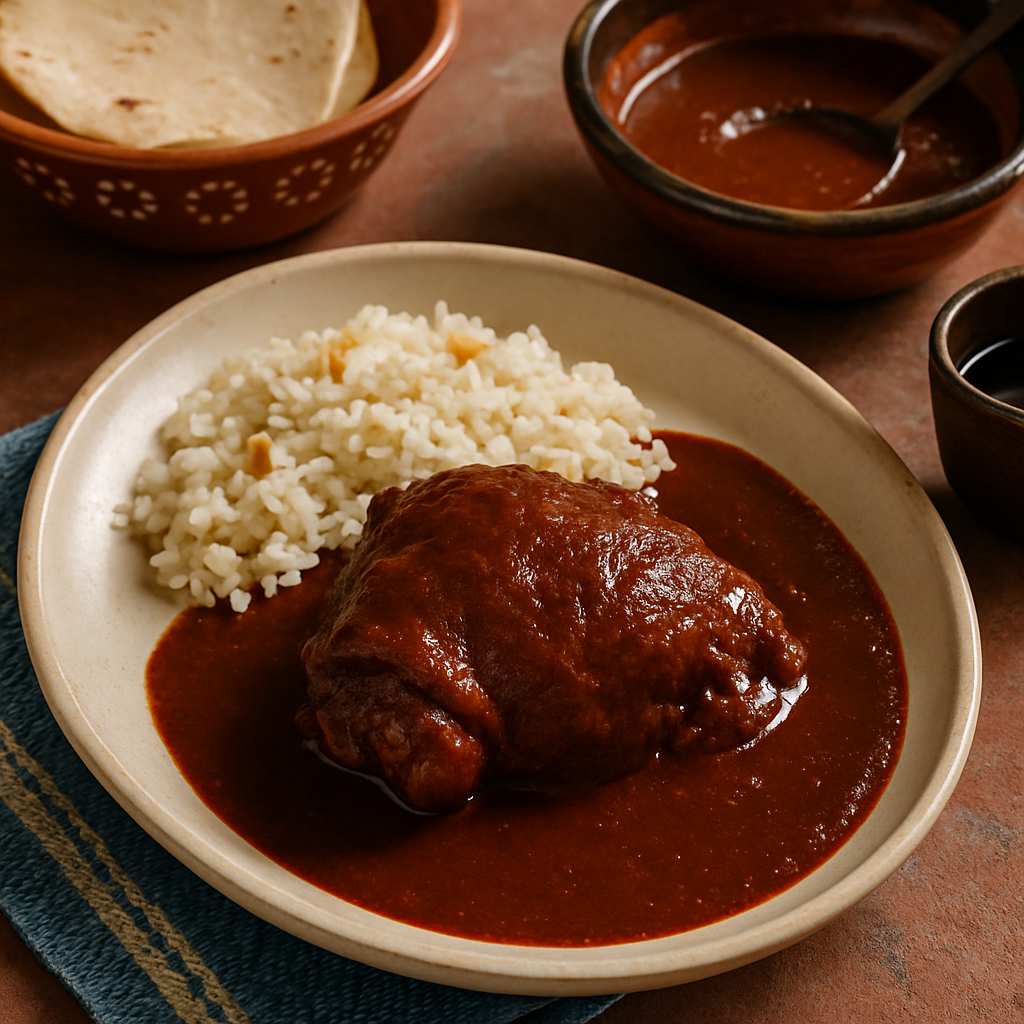
Lift the onion, garlic, and cumin out of the pot and put them straight into the blender. Drain your softened chiles and add them in too, along with one cup of the soaking water — that water has flavor, do not waste it. Add four roma tomatoes chopped rough, a half stick of true cinnamon, and a quarter teaspoon of ground clove. Blend everything until it is completely smooth, one full minute of steady work. The color should be the deep rust of dried earth after the first rain.
4
Now you strain. Pour the chile sauce through a fine sieve back into the cazuela, pushing it through with the back of your spoon so all the rough skin and seed husks stay behind. This is not a step to skip — a mole should be silk on your tongue, not something that reminds you of the work that made it. Cook this sauce in the remaining oil over medium heat, stirring without stopping, four to five minutes. It will darken and thicken and smell like the inside of something old and good.
5
Return the chicken to the pot, skin-side up, nestled into the sauce like it belongs there. Pour in enough water or good broth to barely cover — about three cups. Bring it up to a simmer, then lower the flame until it is just breathing, a gentle bubble at the edge. Cover with a lid or a cloth and let it braise for sixty to seventy-five minutes. The chicken is ready when the bone pulls away without any argument, and the sauce coats the back of your spoon and does not drip off easily. Your kitchen will smell like a grandmother lives there.
6
While the mole does its slow work, make the rice. Heat one tablespoon of oil in a separate pot over medium heat and add the dry rice. Toast it, stirring, two to three minutes until the grains turn from white to the color of old ivory and smell faintly of corn. Add three cups of water or broth and a good teaspoon of salt. Bring to a boil, then cover and lower the flame as far as it will go. Eighteen to twenty minutes, and you do not lift the lid, you do not stir. When the liquid is gone and the rice is tender, take it off the heat and let it sit five minutes before you fluff it with a fork.
7
When the mole has finished, taste it carefully. It should be full and round and deep — the chiles and the warm spices speaking together, not any one of them shouting over the others. Add salt if it needs it. If it is thinner than you like, take the lid off and simmer it ten more minutes until it holds itself. Serve the chicken in its sauce in a shallow bowl with the rice alongside — the rice will drink up what spills over and nothing will be wasted. A wedge of lime on the edge if you have one. This meal is for the long days, and it will carry you through them.